
Reduce energy costs with smarter swimming pool ventilation and heating

- Home
- Insights
- Heating insights
- Reduce energy costs with smarter swimming pool ventilation and heating
As energy prices rise and environmental regulations become stricter, the pressure is on swimming pool operators to bring energy consumption under control. Here, we explain how smarter, sustainable heaters and air handling units for pools can make a massive difference to your operating costs and carbon emissions.
Reduce energy costs with smarter swimming pool ventilation and heating
As energy prices rise and environmental regulations become stricter, the pressure is on swimming pool operators to bring energy consumption under control. Here, we explain how smarter, sustainable heaters and air handling units for pools can make a massive difference to your operating costs and carbon emissions.
Commercial swimming pools have always been significant energy consumers – the average 25m x 12m pool is estimated to use around 360,000 kWh of electricity annually. But now the need to reduce consumption is greater than ever before.
Energy costs are growing. Increasingly stringent environmental policies are being introduced. The long-term viability of public swimming pools across Europe and beyond depends on finding more efficient, cost-effective ways to operate.
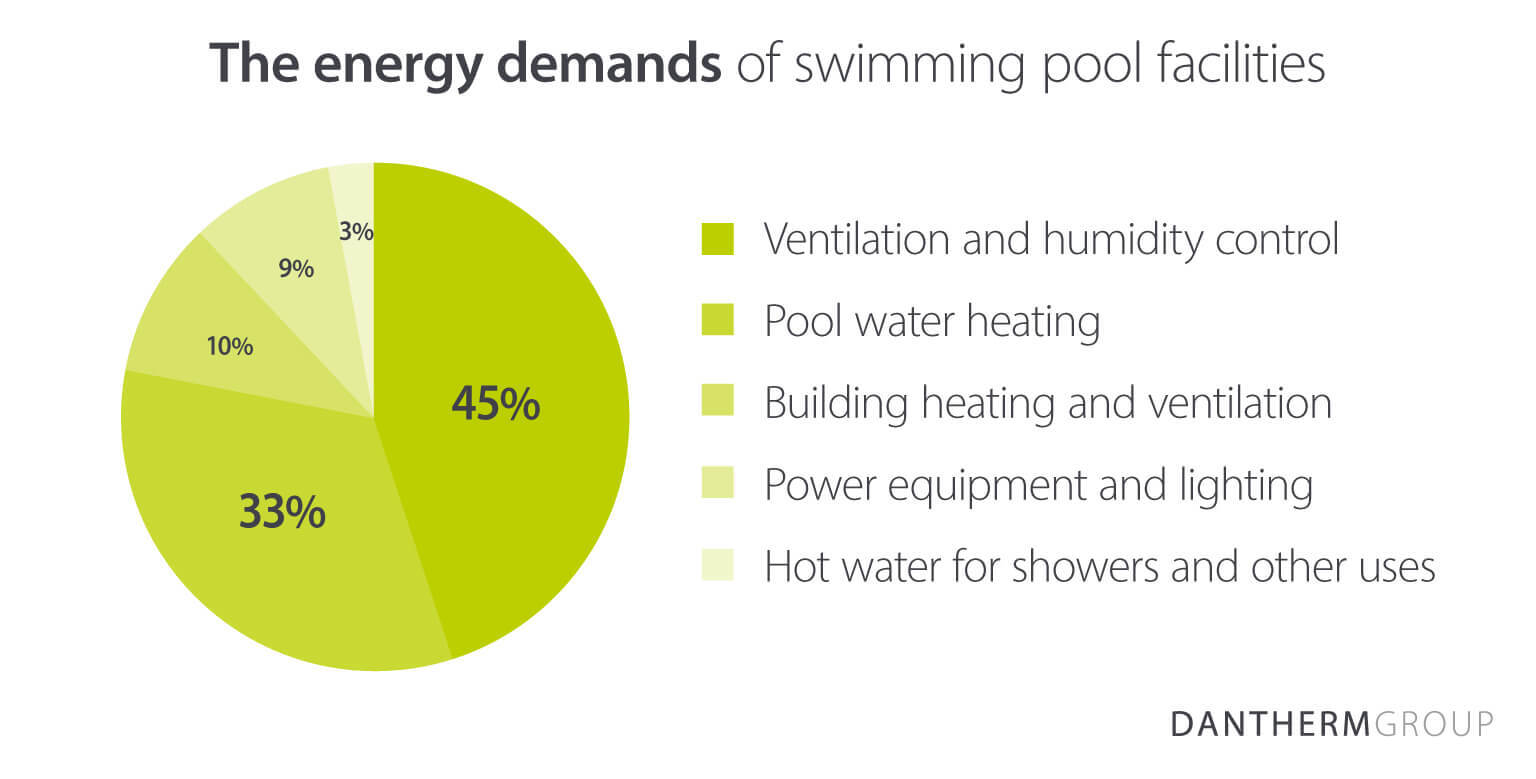
Your pool climate control systems are key to addressing this balance. Research by Energy Procedia found that ventilation, humidity control and pool water heating alone accounted for 78% of a swimming pool facility’s energy usage.
By investing in efficient pool heating systems and ventilation units, you can massively reduce the operating costs and carbon emissions attached to your swimming pool. But what separates the most efficient units from the rest?
Below, we explain how the right swimming pool air handling solutions and heat pumps minimise the energy demands of your facilities – without sacrificing performance or the comfort of your customers.
Achieve long-term pool energy savings with intelligent air handling units
Indoor swimming pools are complex, delicate environments. Any imbalance in temperature, humidity or air quality can create uncomfortable environments for swimmers, encourage mould growth and accelerate pool evaporation – wasting huge amounts of energy.
In larger facilities, a powerful air handling unit (AHU) delivers total swimming pool environment management. It is a specialised HVAC unit for commercial pools that:
Dehumidifies the moist air around a swimming pool, preventing condensation that leads to mould growth and structural damage
Regulates air temperatures to reduce evaporation
Introduces fresh air to dilute contaminants and vents out stale air
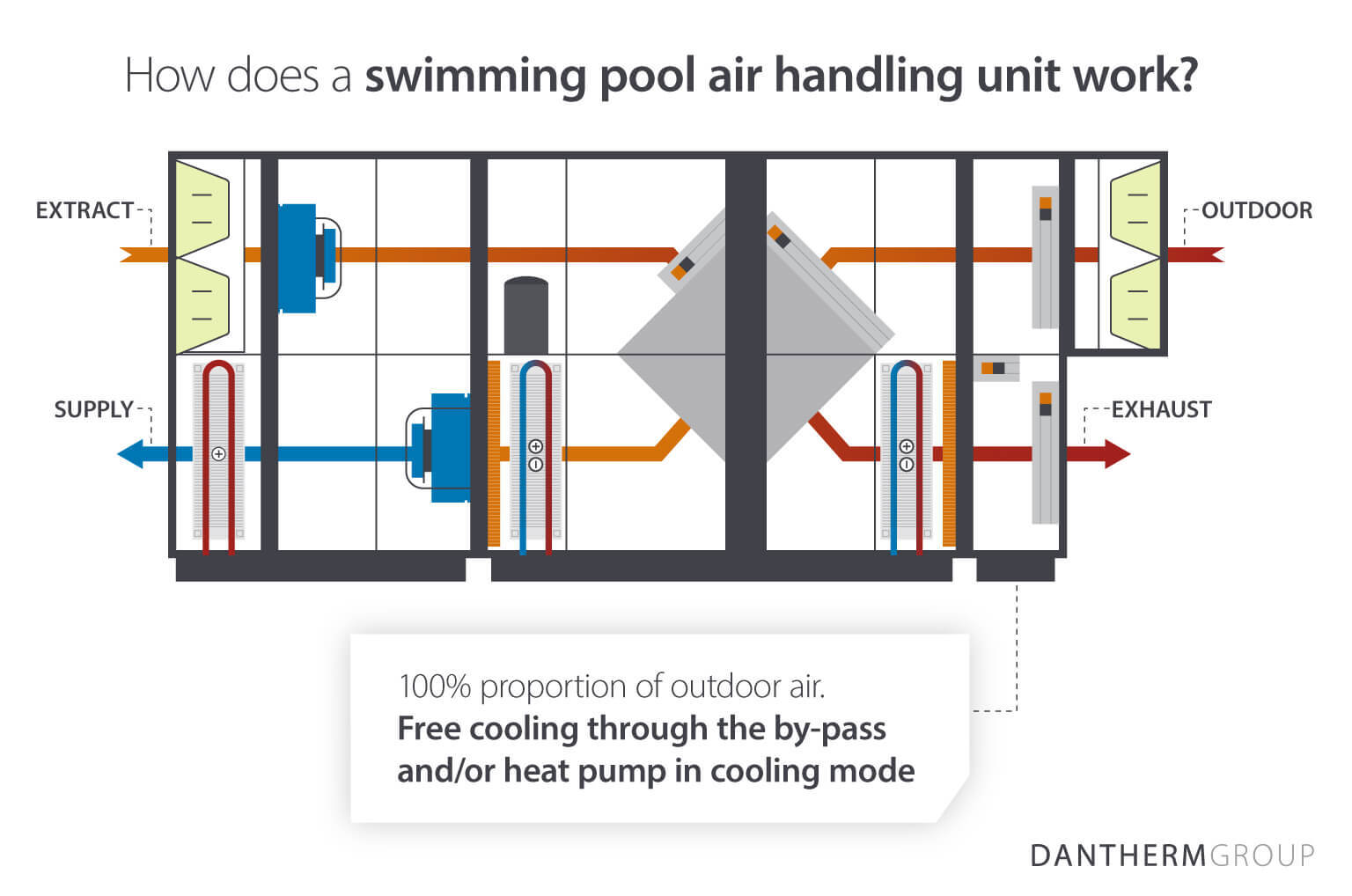
Fundamentally, a swimming pool AHU is critical to create the most comfortable, secure and efficient environment possible. However, not every AHU is created equal. What should you look for to achieve the greatest possible energy savings and carbon reductions?
1. Pool heat recovery technology
First, always prioritise a swimming pool air handling unit that uses the latest heat recovery technology.
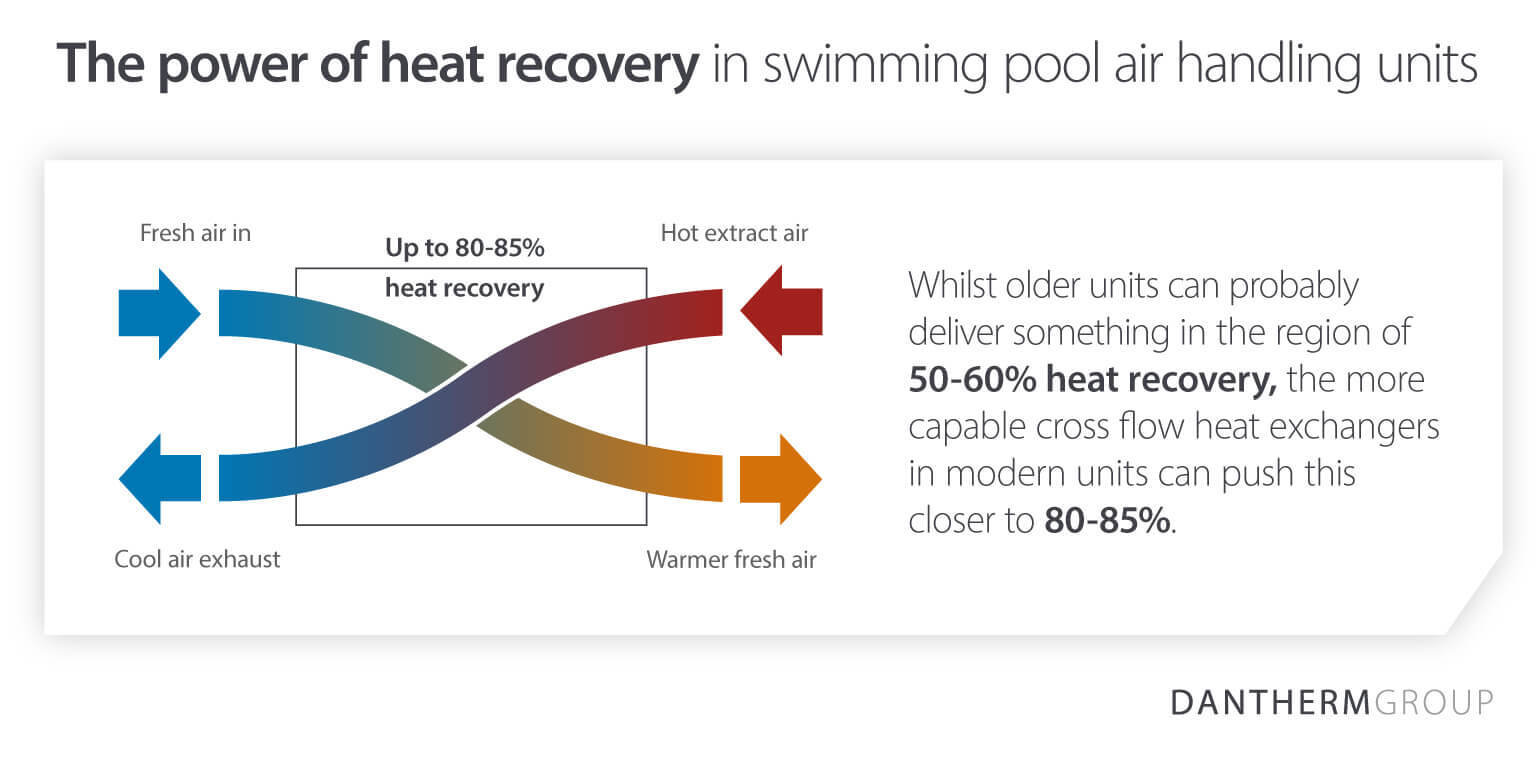
By transferring a large percentage of heat from the exhaust air to the fresh air entering from outside, this saves huge amounts of energy that would be spent warming the cold air.
Modern AHUs should be capable of delivering between 80% and 85% heat recovery. Older or less capable models provide significantly less, meaning you will pay more over time to warm the air in your swimming pool halls.
Particularly during peak times where a lot of fresh air is required to support the people using your swimming pools, heat exchangers greatly reduce your building’s energy consumption, slashing your bills and shrinking your carbon footprint.
2. Minimal pressure drop
The pressure loss in either the air handling unit or its connected ducts makes a big difference in how much energy it consumes.
For example, if the duct pressure in your unit was at 400Pa for 10 hours of full air volume during the day, followed by 14 hours at half-air volume at night, it would increase your system’s energy consumption by 20% compared to an optimised constant pressure setpoint.
By designing your air handling system to maintain a consistently low pressure level, you can make sizeable energy savings. Working with a specialist, such as our experts at Dantherm Group, can help you achieve the right pressure balance.
3. High-efficiency motors and fans
As air handling systems have evolved over the years, more high-efficiency fans and motors have been developed that deliver the same performance at much lower running costs.
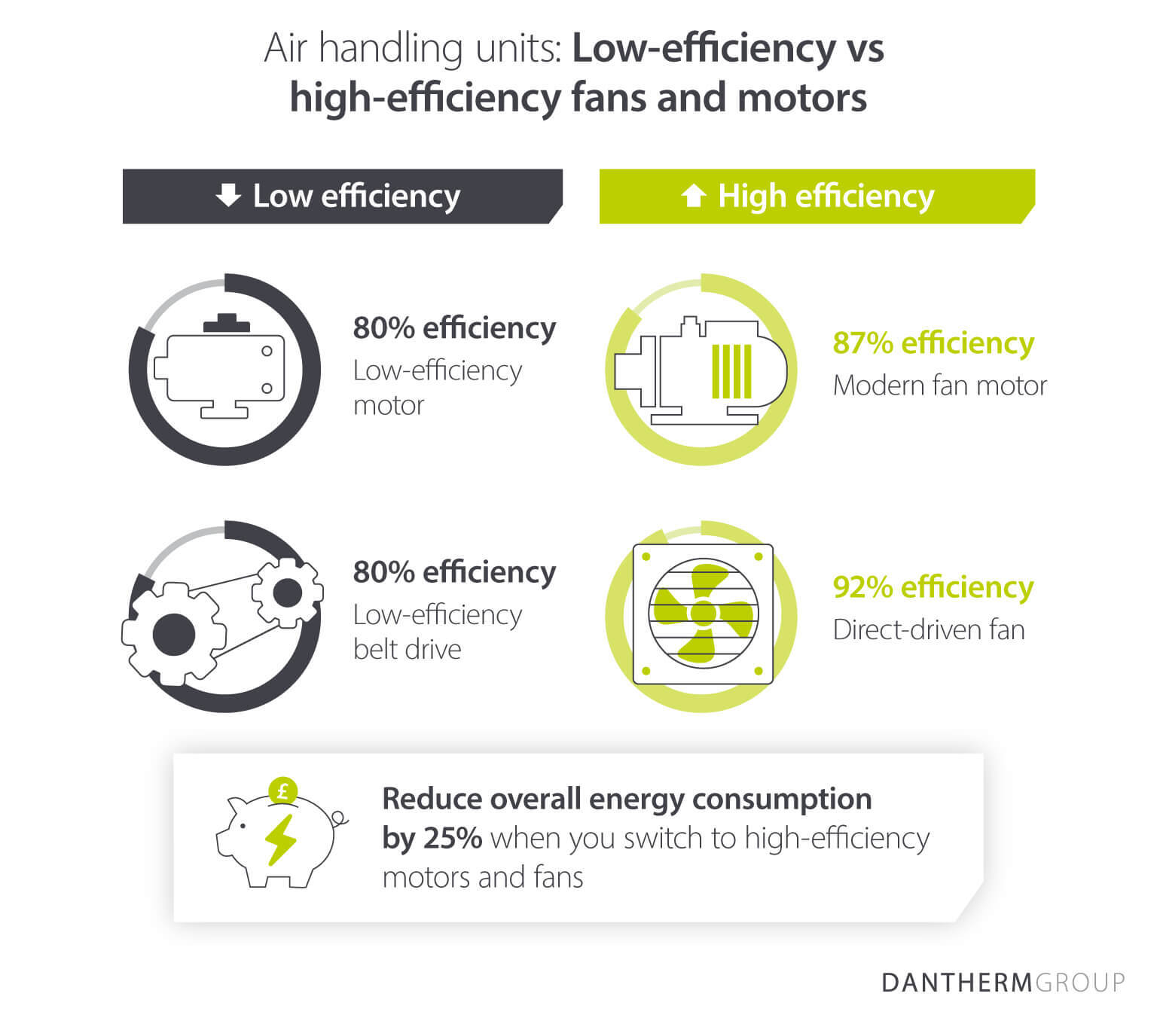
For example, in an aged air handling unit, the motor and belt drive may both work at 80% efficiency. In a modern equivalent unit, the fan motor and direct-driven fans often operate at around 87% and 92% efficiency respectively.
It may not look like much on the surface, but these increases can lead to a 25% reduction in overall energy consumption.
So, it is critical to evaluate the performance of your air handling unit’s motors and fans, and determine if more efficient components could cut your energy costs.
4. Robust control systems
Finally, an air handling unit’s energy-saving potential largely lies in its wider control strategy.
Pool environments change regularly – you could have 50-60 people in there one hour, and only 10 the next. The fresh air demands would be remarkably different, and so would the energy demands on your air handling unit.
Choosing an air handling unit that automatically adjusts its performance based on variable factors, such as pool size, occupancy and water temperature, means its energy consumption remains optimal at all times.
This helps ensure you never waste energy, allowing you to stay within your budgets and better fulfil your environmental obligations.
By prioritising the four factors above when selecting your swimming pool air handling unit (or swimming pool dehumidifier for smaller facilities), you can achieve remarkable, sustainable energy savings, while also maximising your pool’s humidity control.
Minimise energy consumption with sustainable pool heat pumps
Now we’ve discussed air handling, let's switch focus to the next most energy-intensive aspect of a commercial swimming pool – heating the water.
Maintaining a comfortable, consistent pool temperature is key to the comfort and wellbeing of swimmers. Especially for outdoor swimming pools, a capable pool heater is vital to counteract the amount of heat lost to evaporation.
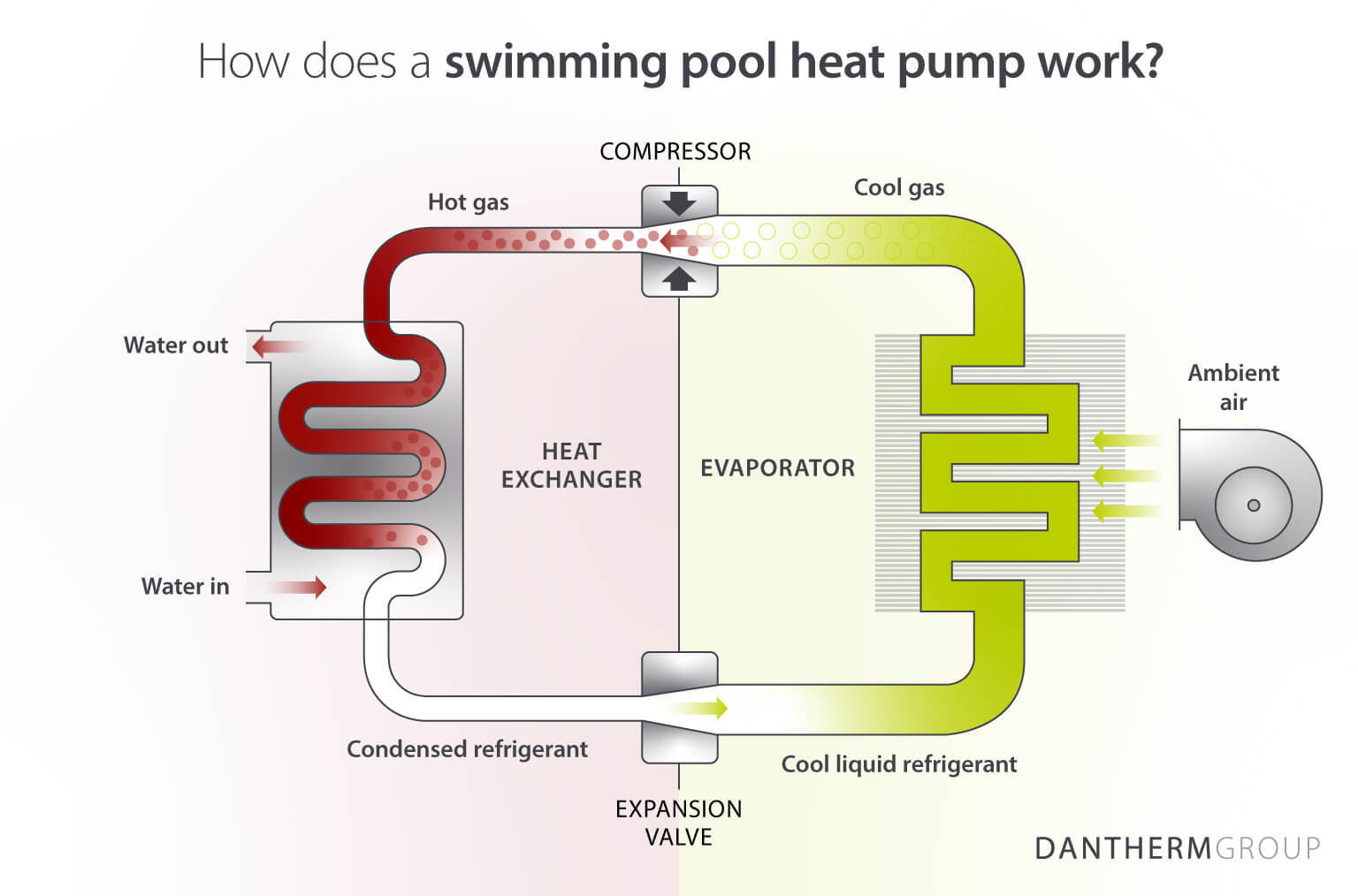
So, the need for a pool heater is undeniable. But which heater gives you the greatest energy savings and minimal carbon emissions?
The answer is a high-efficiency swimming pool heat pump.
An electricity-powered heat pump typically delivers a COP (Coefficient of Performance) of between 4 and 5. In layman’s terms, for every 1kW of electricity it uses, it delivers 4-5kW of heat energy into your swimming pool.
In comparison, a standard gas boiler or electric heater runs at 99% efficiency, meaning that for every 1kW of fuel or electricity used, they will supply 0.99kW of heat energy.
The difference is even more significant with an inverter pool heat pump. The COP of an inverter heat pump can reach up to 13 – for every 1kW of electricity used, it supplies 13kW of heat energy.
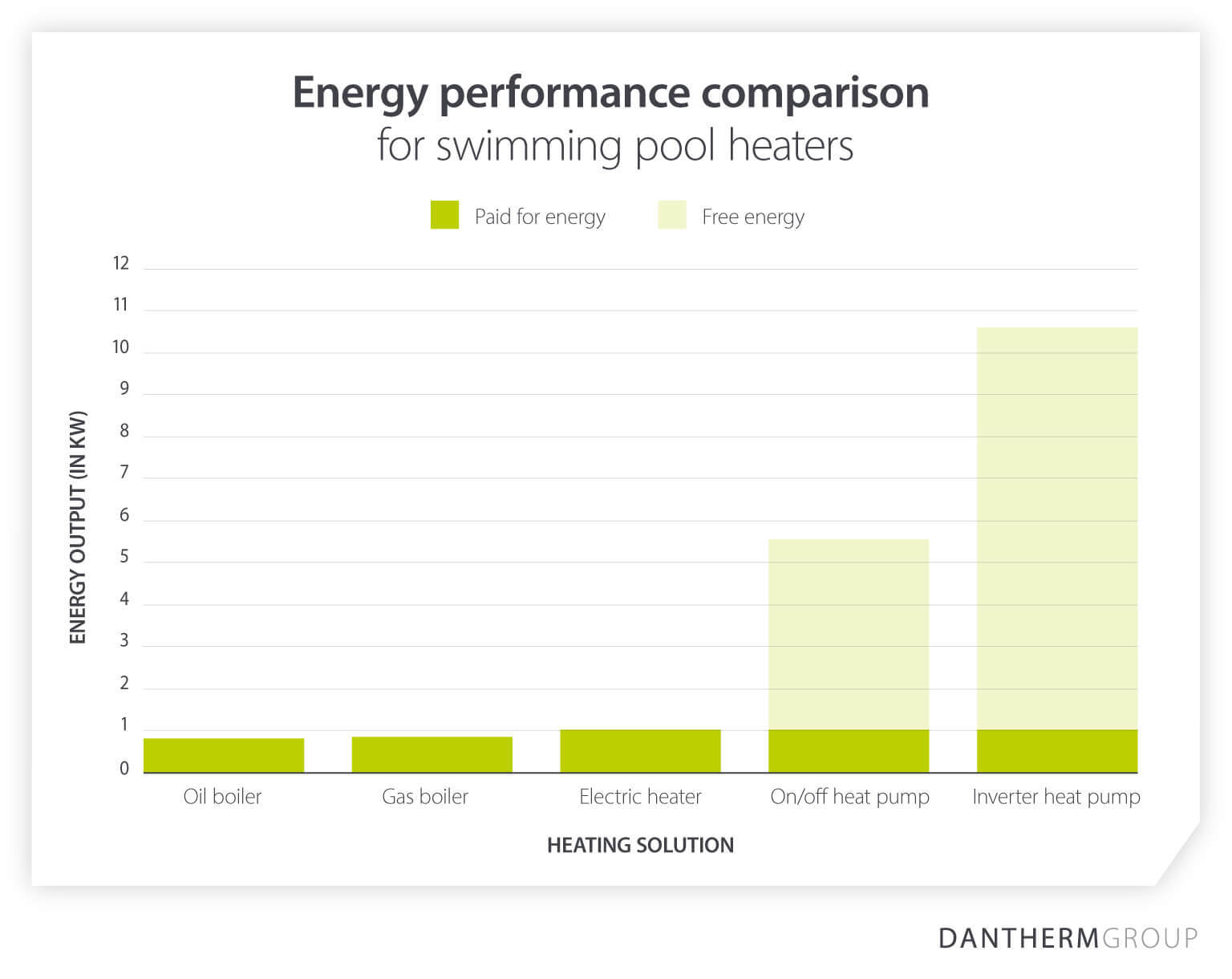
Plus, an inverter heat pump automatically adjusts its performance based on pool conditions. Unlike a fixed, on/off unit, it modulates its speed to find the optimal control point – where the heat it provides offsets the heat lost through evaporation – and stays at this level.
Consequently, an inverter heat pump means you never overspend on energy to keep your pool at the ideal temperature. It is the most efficient, eco-friendly pool heating solution, and provides the best experience for your swimmers.
Moreover, an effective swimming pool heat pump:
Is simpler to install and maintain than a gas boiler, so you don’t need to spend more for a specialist engineer
Has a longer lifespan than an equivalent boiler, meaning you don’t have to repair or replace your heater as often
Runs quietly at slower speeds, creating a more comfortable environment for users and surrounding neighbours
4 additional techniques for optimal swimming pool energy efficiency
As you can see, choosing the right combination of air handling units and swimming pool heat pumps makes the biggest difference to the energy consumption and carbon footprint of your pool facilities.
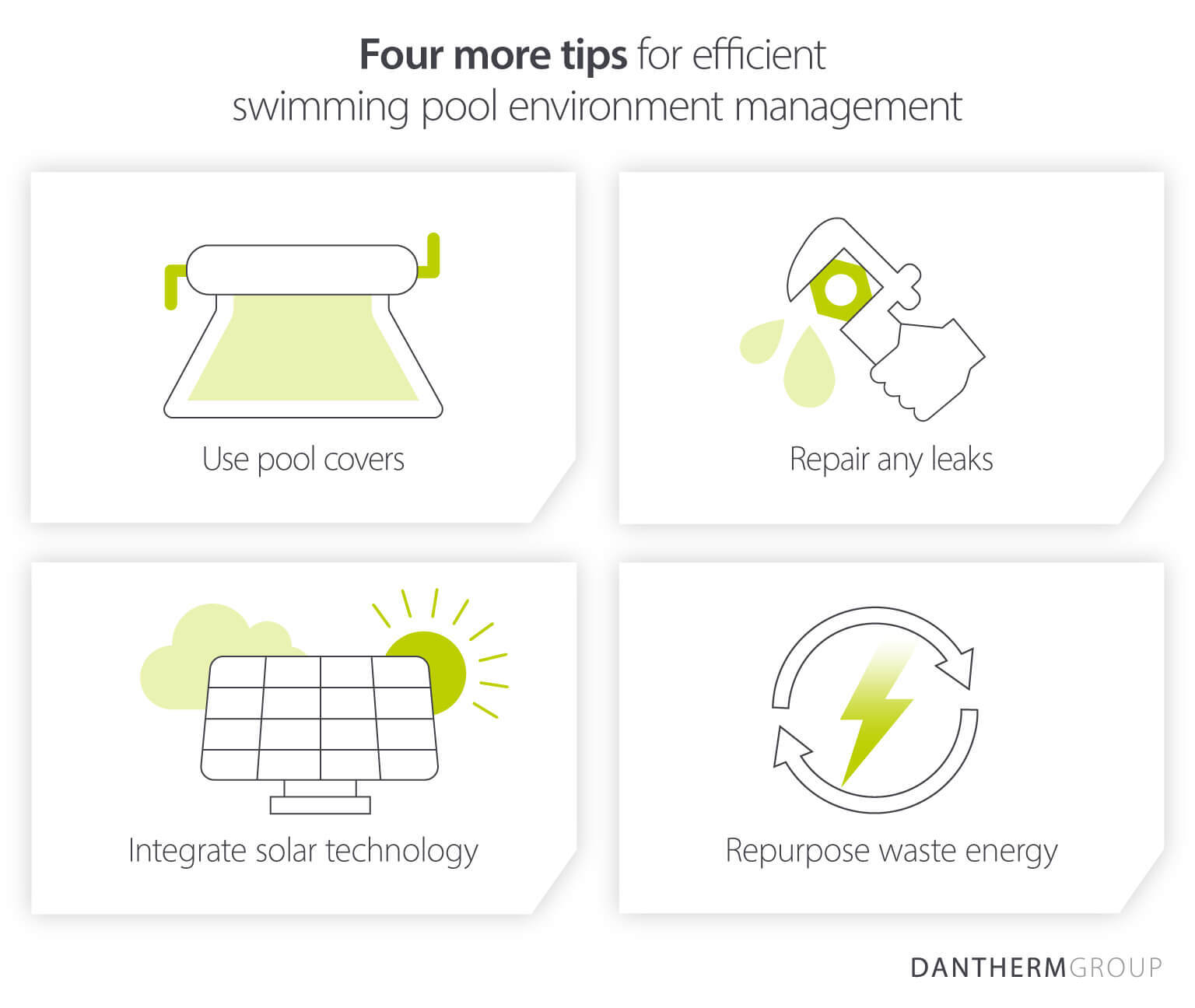
But there are more steps you can to maximise the energy-saving potential of your swimming pools, including:
Using a pool cover
Utilising pool covers to prevent evaporation when your pools are not in use can unlock energy savings of over 200,000 kWh per year and reduce carbon emissions by approximately 35,000 kg annually.
Repairing any leaks
A subtle leak in your pool may mean you are refilling your pool more frequently. By adding cold water from a tap or other source, your heat pump must run at a higher capacity to reach the desired temperature.
Integrating solar heating
Integrating solar thermal technology can supplement existing heating systems, potentially leading to zero-carbon pool heating on particularly sunny days.
Repurposing waste energy
A leisure centre in Exmouth, Devon, harnessed a small data centre's waste heat to heat its own swimming pool, resulting in significant cost savings and reduced carbon emissions.
Discover energy-efficient swimming pool heating, ventilation and humidity control at Dantherm Group
As the burden on swimming pool operators to reduce operating costs and cut their carbon footprints gets heavier, energy-saving climate control technology is the key to a greener, more affordable future.
From efficient pool dehumidification and air handling units to eco-friendly pool heating solutions, Dantherm Group is here to help you unlock major energy reductions across your buildings.
With over 40 years of specialist experience in swimming pool climate control, we design, engineer and supply some of the most energy-efficient solutions worldwide – tailored to the exact needs of our customers.
Powerful inverter heat pumps. Versatile air handling units. Chlorine-resistant dehumidifiers. Our extensive range covers all areas to help you maintain the most sustainable swimming pool environment possible, without compromising on the comfort or safety of your swimmers and staff.
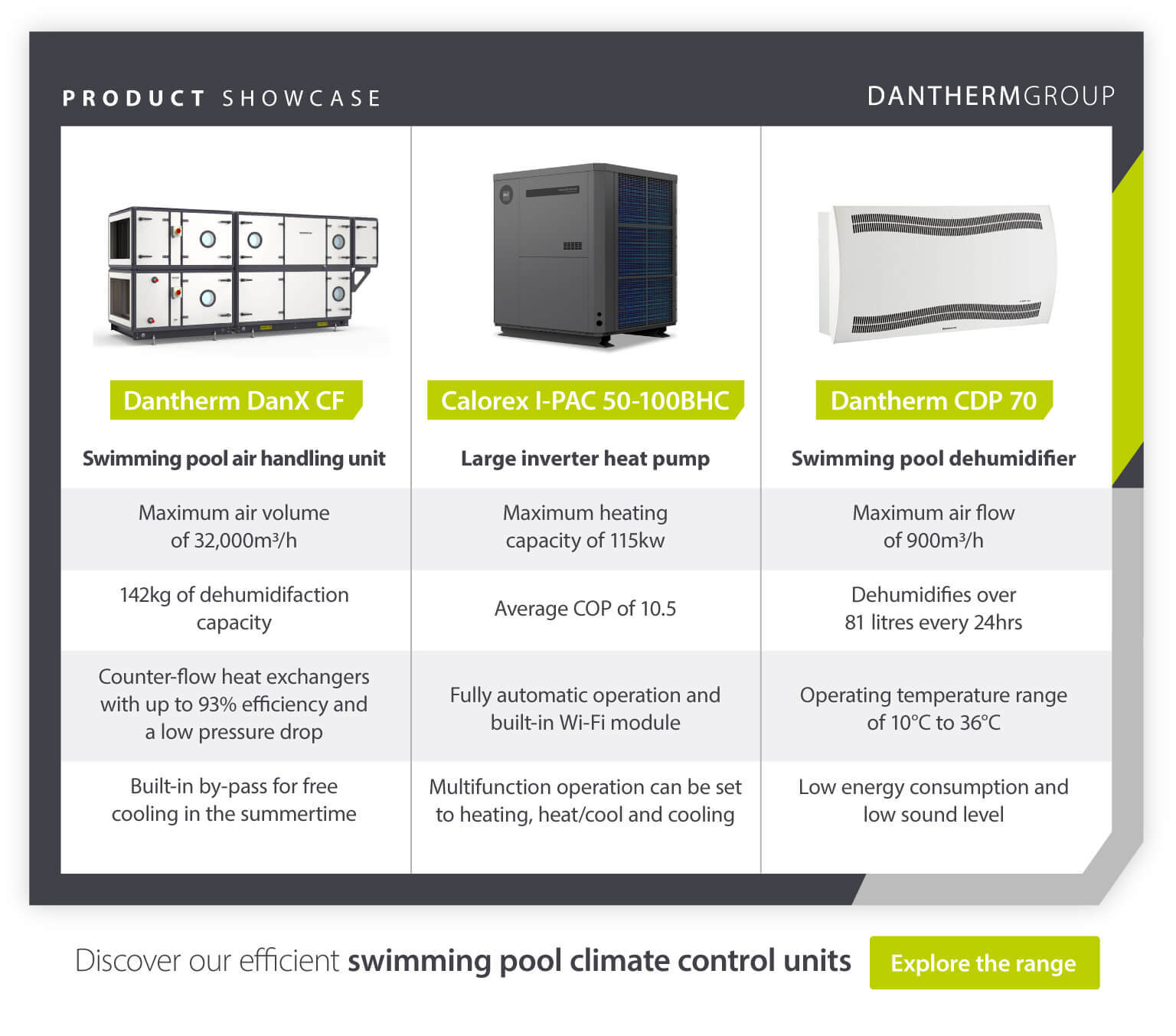
For more information on our economical, environmentally friendly swimming pool climate control units, get in touch with our team.
Related products
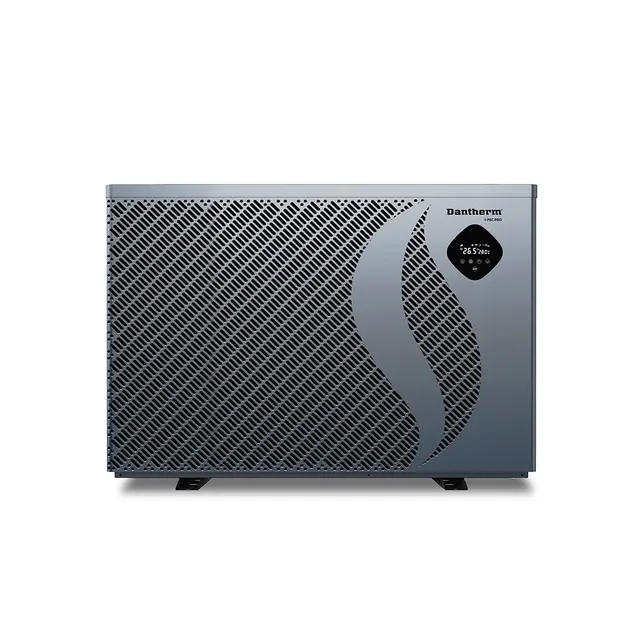
High-performance pool heating
Engineered with cutting-edge technology and eco-friendly components.
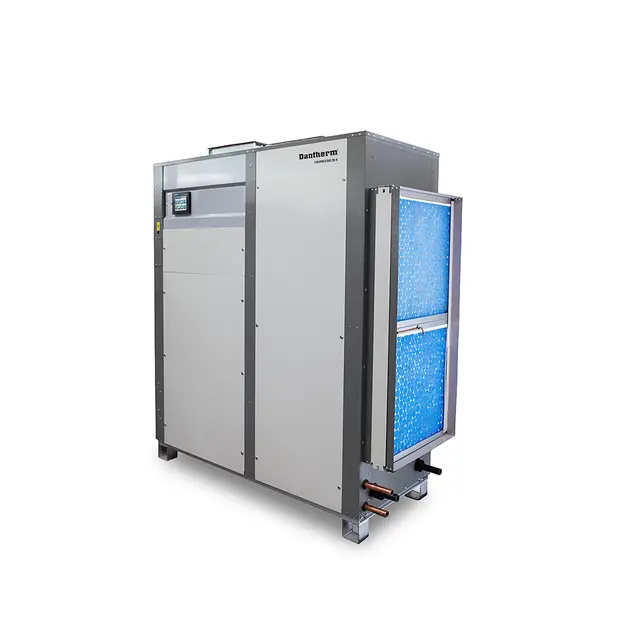
Delta 2-4-6-8-10-12-14-16 swimming pool air handling
Incorporating hybrid heat pump and fresh air dehumidification technology, Delta units are ideal for commercial and public indoor pools.
Featured insights
Gain valuable insight into what you need to select the right size dehumidifier for your pool.

Providing the perfect temperature for your swimming pool


Finding the ideal balance of air quality, climate control and cost-saving

Need help with choosing the right solution? Our team of over 100 climate control experts can assist.
You can also reach out or join the discussion on our Social Media. Check out our LinkedIn page.