
Investment protection for drying equipment: The rule of 35
- Home
- Insights
- Humidity control and drying insights
- Investment protection for drying equipment: The rule of 35
Learn how high temperatures affect drying equipment and how the Trotec Qube+ uses advanced thermal protection and turbine cooling for reliable operation above 35°C.
What is the “Rule of 35”?
In summer, high temperatures can present major challenges during water damage restoration and construction drying. Unfavourable conditions, such as attics or rooms with large window areas, can quickly push drying equipment to its limits.
The simple “Rule of 35” can help protect professional drying equipment and maintain reliable operation during water damage restoration and construction drying.
How can you protect your drying equipment?
For professional drying operations, it is important to select equipment that can manage demanding temperature conditions. This is particularly important for insulation drying after water damage, where the drying equipment often operates continuously for extended periods of time. The obvious method, of course, is to make sure the room temperature stays below 35 °C. This may well extend the lifetime of your condensation dryer by many years. But what if that is not possible?
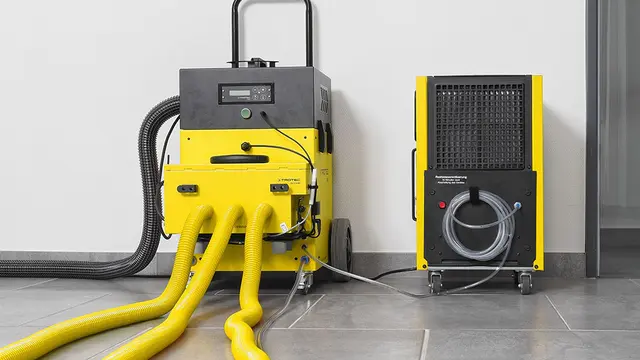
The Trotec Qube+ combines compact design with advanced thermal protection technology. Its sensor-based thermal protection monitors the operating conditions and regulates the unit when temperatures become critical. Advanced CFD simulations have also been used to optimise the internal airflow path. This ensures that the turbine always receives sufficient cooling airflow. The result is improved thermal stability and reliable operation in high-temperature environments above 35°C.
Instead of simply shutting down when conditions become demanding, the Qube+ can regulate its operation to maintain stable conditions. This supports continuous drying and can reduce the need for on-site visits to restart the unit or adjust the working conditions.
Managing heat during insulation drying
Insulation drying equipment can contribute to an increase in room temperature because the process air is returned to the drying environment. This makes thermal management particularly important during water damage restoration.
One practical solution is to discharge the warm process air through a 50 mm hose using the integrated connector. Where this is not possible, the insulation drying unit can be installed outside the room being dried, with the hose connected through a suitable door gap nozzle.
Good airflow management and effective thermal protection help protect both the drying equipment and the materials in the building.
Why temperature matters during water damage restoration
Temperature also affects the drying process itself. At very high temperatures, moisture transport in building materials becomes less efficient. Above approximately 45°C, moisture transport takes place mainly through diffusion rather than capillary transport. This means that simply increasing the temperature does not necessarily result in faster or more efficient drying.
For professional water damage restoration and construction drying, controlled drying conditions are therefore essential.
The Trotec Qube+ is the compact all-in-one solution for professional insulation layer drying, combining water separation, filtration, noise reduction and compression. Its optimised airflow design and advanced thermal protection help deliver dependable performance even in demanding conditions above 35°C, while protecting internal components from excessive heat and helping to extend service life.
The result is reliable insulation drying, improved equipment protection and less need for on-site intervention.
Interested in learning more about protecting professional drying equipment and maintain reliable operation during water damage restoration and construction drying? Get in touch with us using the contact form below.


Related products
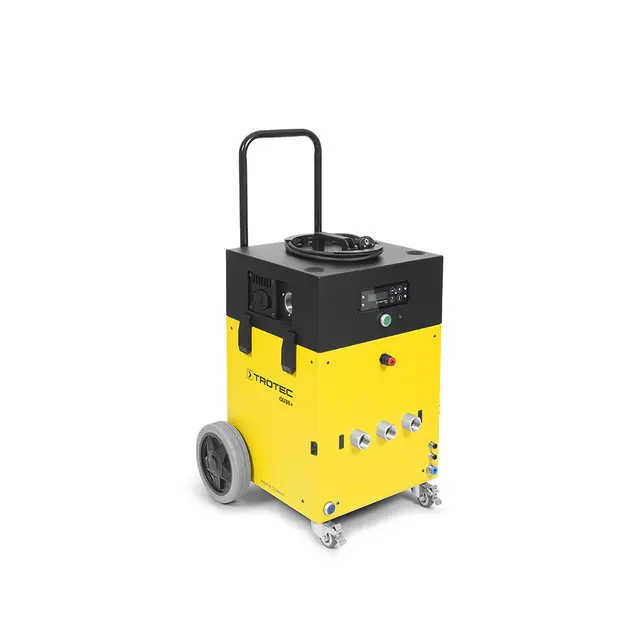
Professional insulation dryer
A powerful yet compact all-in-one insulation drying solution with integrated water separator, 4-stage filtering and silencer.
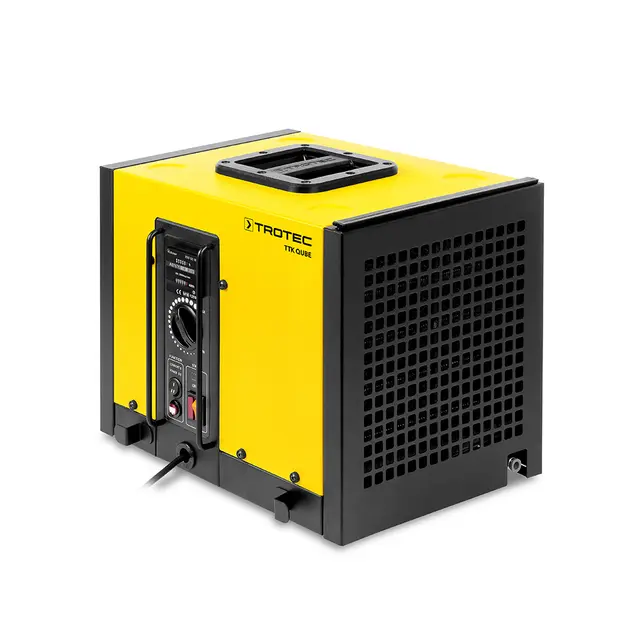
Professional commercial dehumidifiers
Low-noise "power cube" from EU manufacturing for professional drying applications – ultra-compact, efficient, quiet.
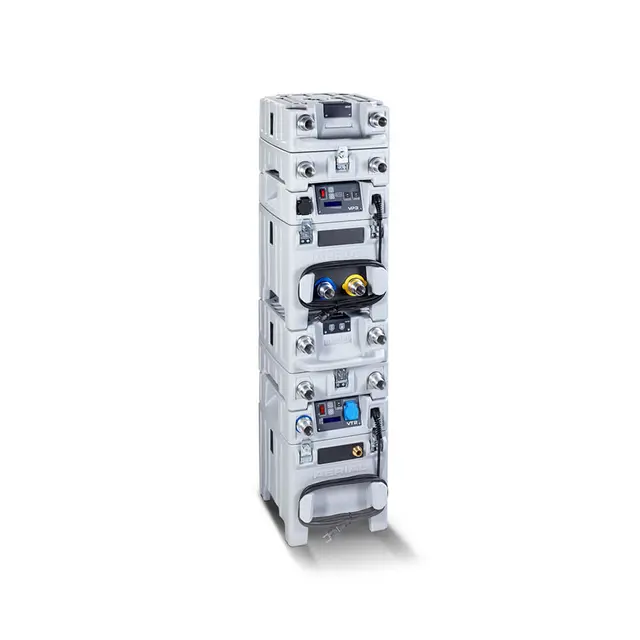
Drying technology
Energy-efficient and flexible drying system for targeted building drying and water damage restoration projects.
Featured insights
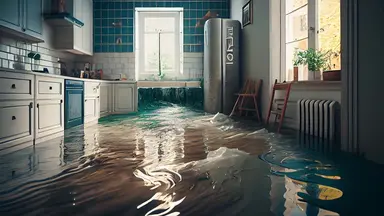
Discover everything you need to know about approaching a water damage restoration project.

Explore the factors that raise the cost of water damage work for contractors – and where you can make savings.
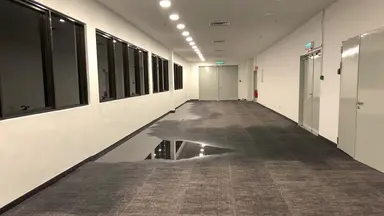
Explore the factors that influence the amount of time it takes to dry water damage, including the equipment you use.
Need help with choosing the right solution? Our team of over 100 climate control experts can assist.
You can also reach out or join the discussion on our Social Media. Check out our LinkedIn page.